
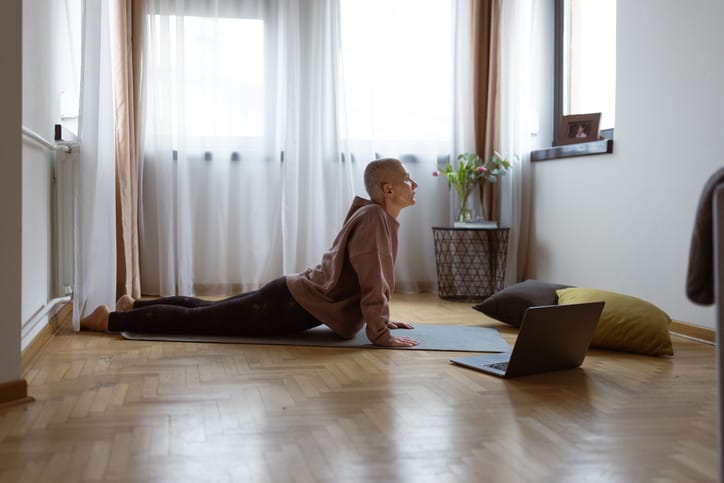

Exercise has always been part of my identity, long before illness tried to redefine my body.
At 12 years old, I earned a presidential award for completing 100 sit-ups in one minute! That was the moment that instilled a lifelong confidence in what my body could do.
Through my teenage years, I ran track and played girls’ basketball in high school, learning discipline, teamwork and the quiet power of consistency. Movement wasn’t just something I did; it was how I understood myself.
That relationship with exercise carried me through adulthood. From my twenties through my fifties, jogging and aerobics became my steady companion. It was my time to think, breathe, feel strong and keep my competitive edge. I had even begun to dabble in some hatha yoga.
Then came my diagnosis of endometrial cancer and the life-altering reality of a radical hysterectomy. Overnight, my body felt unfamiliar. Surgery saved my life, but it also brought fear, pain and uncertainty. Would I ever feel strong again? Could exercise still be safe?
Learn more about endometrial cancer treatment and care
My journey back to exercise has been slow, deliberate and deeply humbling. I had to relearn my body, listening more closely than ever before. Walking came first. Gentle stretching followed. Eventually, with medical guidance, I am reintroducing strength training and core work. Progress is no longer measured in miles or minutes anymore, but in trust. I am trusting that my body can heal and adapt.
One of the most important lessons I learned is how essential exercise is for protecting pelvic health. After a hysterectomy, the risk of pelvic floor prolapse can increase due to changes in internal support. Since my uterus, ovaries and cervix have all been removed, my bladder and intestines moved around after surgery, and it became a bit more difficult to hold my bladder.
Targeted exercise–pelvic floor strengthening, core stability, and proper breathing–helps support those organs, reduce pressure and maintain function. Strong muscles act like an internal support system, and movement encourages circulation, healing and resilience.
Today, exercise looks different than it once did, but its meaning is deeper. Exercise is no longer about performance for me–it is about preservation, confidence and self-respect. Returning to movement after cancer reminded me that my strength wasn’t lost, but ever evolving. Every step, every careful repetition, is a celebration of survival and a commitment to living fully in the body I fought so hard to keep.
Sign up here to get the latest news, perspectives, and information about EC sent directly to your inbox. Registration is free and only takes a minute.
