
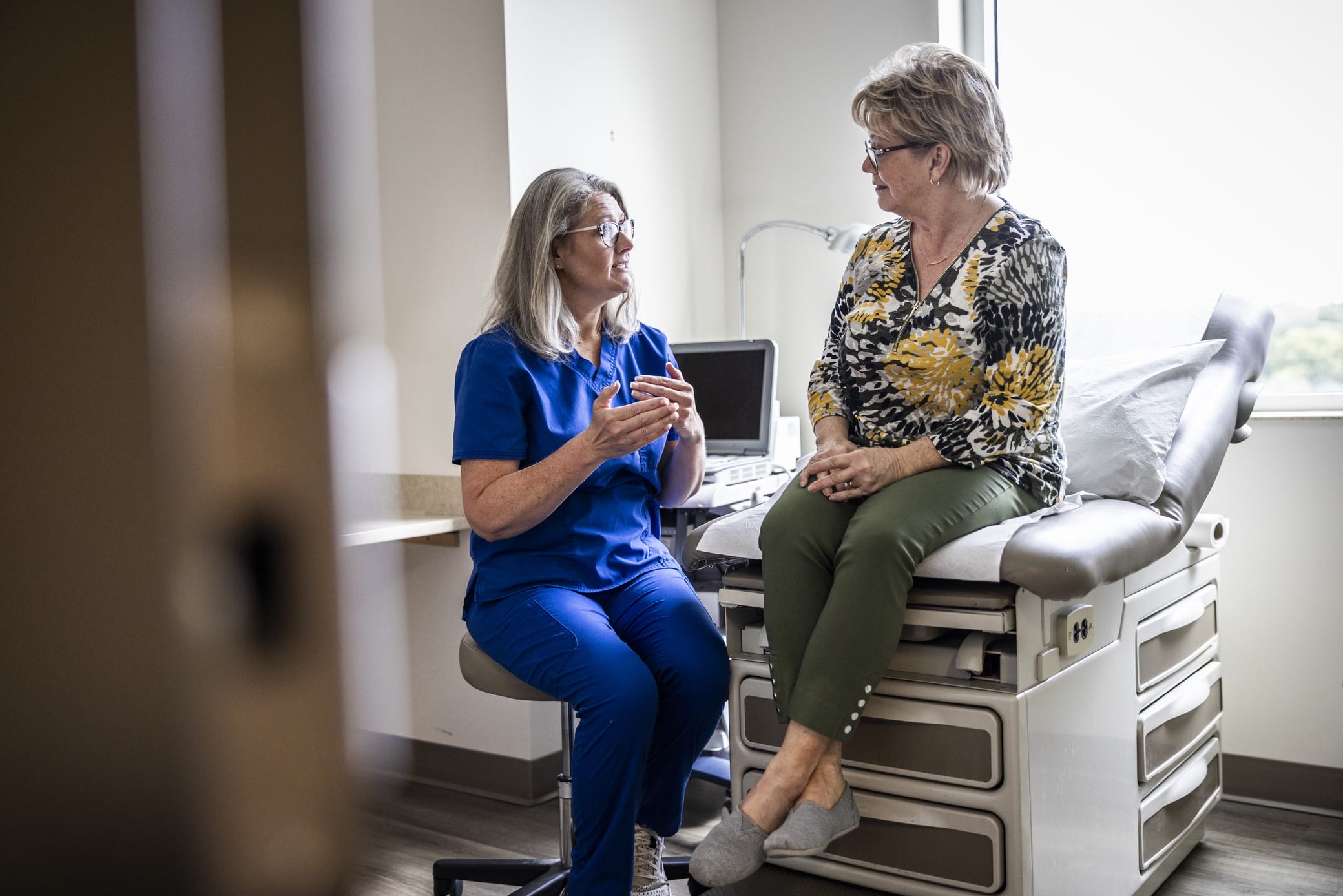
Pelvic floor weakness is common in women who undergo treatment for endometrial cancer (EC). Still, the symptoms can feel embarrassing, making it a hard topic for many women to bring up with their doctors.
You should know that pelvic floor therapy can help. It often consists of simple exercises and techniques to strengthen the pelvic floor muscles.
What is the pelvic floor?
The pelvic floor is a group of muscles, ligaments and connective tissue at the bottom of the pelvis. You can think of it as a sling that supports the bladder, vagina, uterus and rectum.
A healthy pelvic floor is crucial for these organs to work the way they should. When there’s problems with the pelvic floor, it can have a major effect on quality of life.
Why does EC treatment impact the pelvic floor?
Several EC treatments can damage the muscles and nerves of the pelvic floor, making them harder to control, coordinate or relax.
Hysterectomy can affect the muscle tone of the pelvic floor, causing these muscles to be stiff and more difficult to activate.
Radiation therapy can create scar tissue and carries many side effects that can impact pelvic floor function. These include diarrhea, fecal incontinence, radiation cystitis leading to urine leakage, fibrosis, sexual dysfunction, muscle weakness and fatigue.
Chemotherapy can also weaken the pelvic floor muscles, as well as cause pain and incontinence.
Read more about EC treatment and care
What are the symptoms of pelvic floor weakness?
Your oncologist can refer you to a pelvic floor physical therapist or physiotherapist if you experience any of the following symptoms:
- Urinary incontinence or leakage, particularly due to coughing or sneezing.
- Bowel incontinence, including constipation and fecal leakage.
- Pain during sex.
- Pain in the bladder, bowel or pelvis.
- Pelvic organ prolapse (an organ dropping down, creating a bulge in the vagina).
- A feeling of pressure or heaviness in the pelvis.
After EC treatment, symptoms of pelvic floor weakness might not appear right away; they can be gradual and progressive, getting worse over time. If symptoms start sooner, it is important to wait six to eight weeks following EC surgery or radiation before starting to strengthen your pelvic floor.
How a pelvic floor therapist can help
Pelvic floor therapy uses tailored, guided exercises and deep breathing to build back these muscles.
A pelvic floor therapist will perform a physical exam to assess the strength of your pelvic floor before creating a tailored treatment plan. These are some of the options that may be suggested according to your needs:
- Kegels, or pelvic muscle strengthening exercises that tighten and lift the pelvic floor.
- Core and hip exercises to strengthen surrounding muscles.
- Deep breathing and relaxation techniques to access the right muscles.
- Building awareness around the correct use of the muscles.
- Electrostimulation to help muscles contract.
- Light exercise such as walking to strengthen pelvic and core strength.
Early and consistent therapy will help to strengthen the pelvic floor post-EC treatment and avoid the potential embarrassment and inconvenience of certain symptoms.
Sign up here to get the latest news, perspectives, and information about EC sent directly to your inbox. Registration is free and only takes a minute.
