
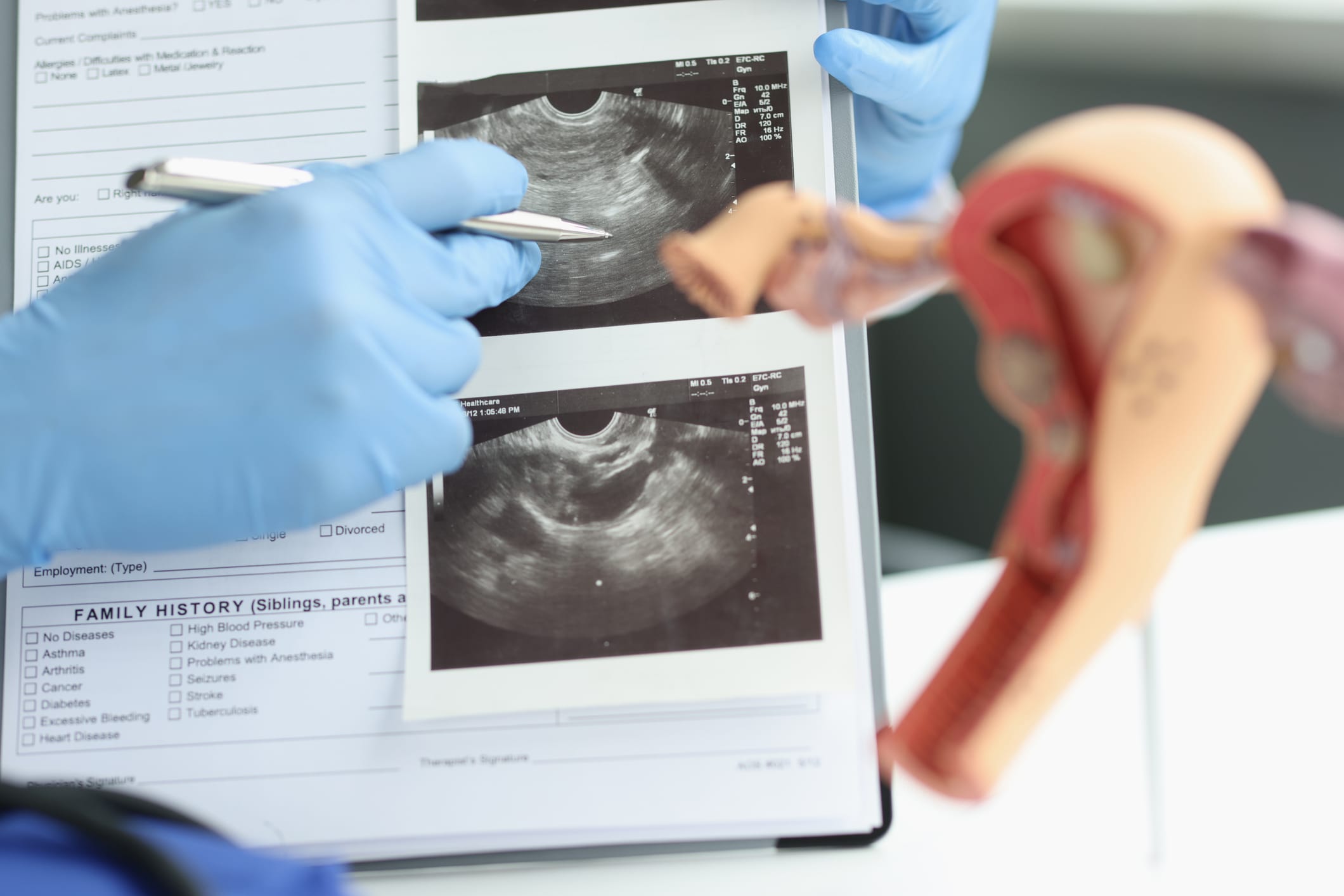
For many women, a transvaginal ultrasound might be the first of several tests and procedures that lead to an endometrial cancer (EC) diagnosis. This scan provides a detailed view of the uterus, and can help lead doctors to the right next steps in diagnosis and treatment.
What is a transvaginal ultrasound?
A transvaginal ultrasound is an imaging test that uses sound waves to create detailed images of the pelvic organs, including the uterus and endometrium (the lining of the uterus). Unlike an abdominal ultrasound, where a probe is placed on the stomach, a transvaginal ultrasound involves inserting a wand-like instrument into the vagina. The instrument produces real-time images of the pelvic organs that are projected onto a screen. Still images called sonograms can also be captured during the procedure.
A transvaginal ultrasound is quick, usually taking about 30 minutes. While they can be uncomfortable, they should not be painful, and they carry little risk of side effects.
How are transvaginal ultrasounds used to diagnose endometrial cancer?
One of the hallmark symptoms of endometrial cancer is postmenopausal bleeding. When a woman experiences spotting or bleeding after menopause, her doctor may order a transvaginal ultrasound as the first step in evaluation.
A transvaginal ultrasound will show if a uterine tumor is present. The scan also allows medical professionals to see if the endometrium is thicker than normal, which can indicate abnormal growth and a higher likelihood of cancer or precancerous changes.
Transvaginal ultrasounds can help physicians quickly identify if you are at risk of EC and need additional testing, such as an endometrial biopsy. Conversely, if the lining is thin and other abnormalities are not found, cancer is far less likely and more invasive testing may be avoided.
Learn more about EC testing and diagnosis
What are the limitations of transvaginal ultrasounds?
Transvaginal ultrasounds have become a frontline tool for detecting EC, as they’re widely available, relatively inexpensive and provide immediate results.
But these tests cannot diagnose cancer definitively. For example, a thickened endometrium may be caused by benign conditions like polyps or fibroids, and occasionally cancers can occur even when the lining appears thin.
For this reason, if symptoms persist, doctors often recommend follow-up testing regardless of the ultrasound result.
Do I need to prep for a transvaginal ultrasound?
There’s little you need to do before a transvaginal ultrasound, but to prepare, consider the following:
- You’ll need to remove your pants and underwear for the procedure, so for ease and comfort, wear clothing that’s not too difficult to slip in and out of.
- If you’re on your period, remove your tampon before the procedure.
- Follow your doctor’s instructions on when to drink fluids and use the bathroom (the amount of fluid in your bladder can impact the view of your pelvic organs).
You won’t need to ask someone to drive you or pick you up from the office, and you can return to work and go about your day after your appointment is over.
Sign up here to get the latest news, perspectives, and information about EC sent directly to your inbox. Registration is free and only takes a minute.
