
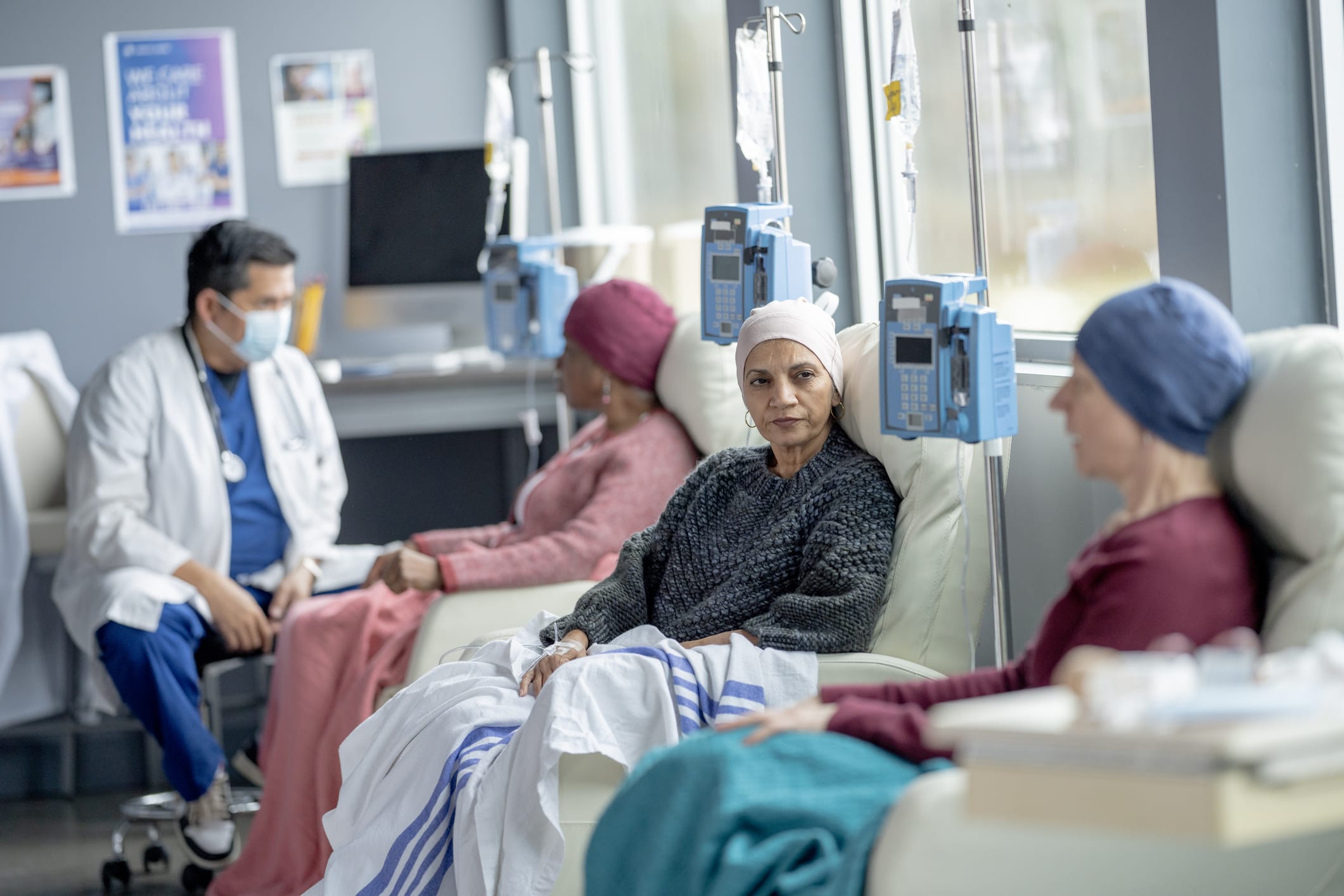
Your first chemotherapy session for endometrial cancer (EC) will probably mean worries and anxiety about what to expect and how you’ll feel after. This first session will answer many of your questions and allow you to be better informed for your next sessions.
Your first chemotherapy session
Chemotherapy for endometrial cancer is usually administered intravenously into your arm or hand, but it may also be by mouth or given as an injection. Unless you are unwell and require close monitoring, IV chemotherapy will take place at an outpatient clinic.
The day before each chemotherapy session you will need to get a blood test to check your white blood cell count and kidney and liver function. If there is any risk of infection or if you have a fever, your session will be postponed.
When you arrive, the nurse will take your vitals, namely blood pressure, pulse, temperature and respiratory rate. If you are in overall good health, you will be able to proceed with your chemotherapy session.
First, you will receive IV medication to help prevent side effects such as nausea. Next, you’ll receive the chemotherapy drugs. The time you are required to stay on site will depend on the specific drug combinations decided on by your gynecological oncologist. In general, it is at least several hours. Bring a book or a friend to help pass the time.
Once the drugs have been administered, you will remain under observation until the health care team is satisfied that you are well enough to leave.
Learn more about EC treatment and care
Preparing for your first session of chemotherapy
The idea of starting chemotherapy can create feelings of anxiety and dread. It is known as a toxic treatment, essential to fight cancer but with a range of possible side effects from nausea to fatigue. Each individual person reacts slightly differently to chemo, and you won’t know how your body will react until you complete your first session. Here are some tips to help you prepare:
Avoid online research. The best source of information is your health care team. Take some time to formulate your questions, write them down, ask your health care team for answers and write down the information. Make sure you’re aware of possible side effects.
Explore patient resources. Ask your health care team for advice on the valuable support available from patient associations. You might find it useful to access first-hand accounts as well as tips and tricks for managing chemotherapy.
Prepare yourself physically. You don’t know yet how your body will react to the drugs. Your doctor will share a list of possible side effects to look out for. Before your first chemotherapy session, take care of your physical health by resting, sleeping and ensuring good nutrition and hydration.
Prepare yourself psychologically. Remind yourself that chemo is a means to an end. The drugs are toxic, and side effects are to be expected, but the objective is to kill any cancerous cells.
Keep a diary. Have a journal ready to note down your day-by-day experience of chemotherapy. This will help you know what to expect for future sessions.
Sign up here to get the latest news, perspectives, and information about EC sent directly to your inbox. Registration is free and only takes a minute.
