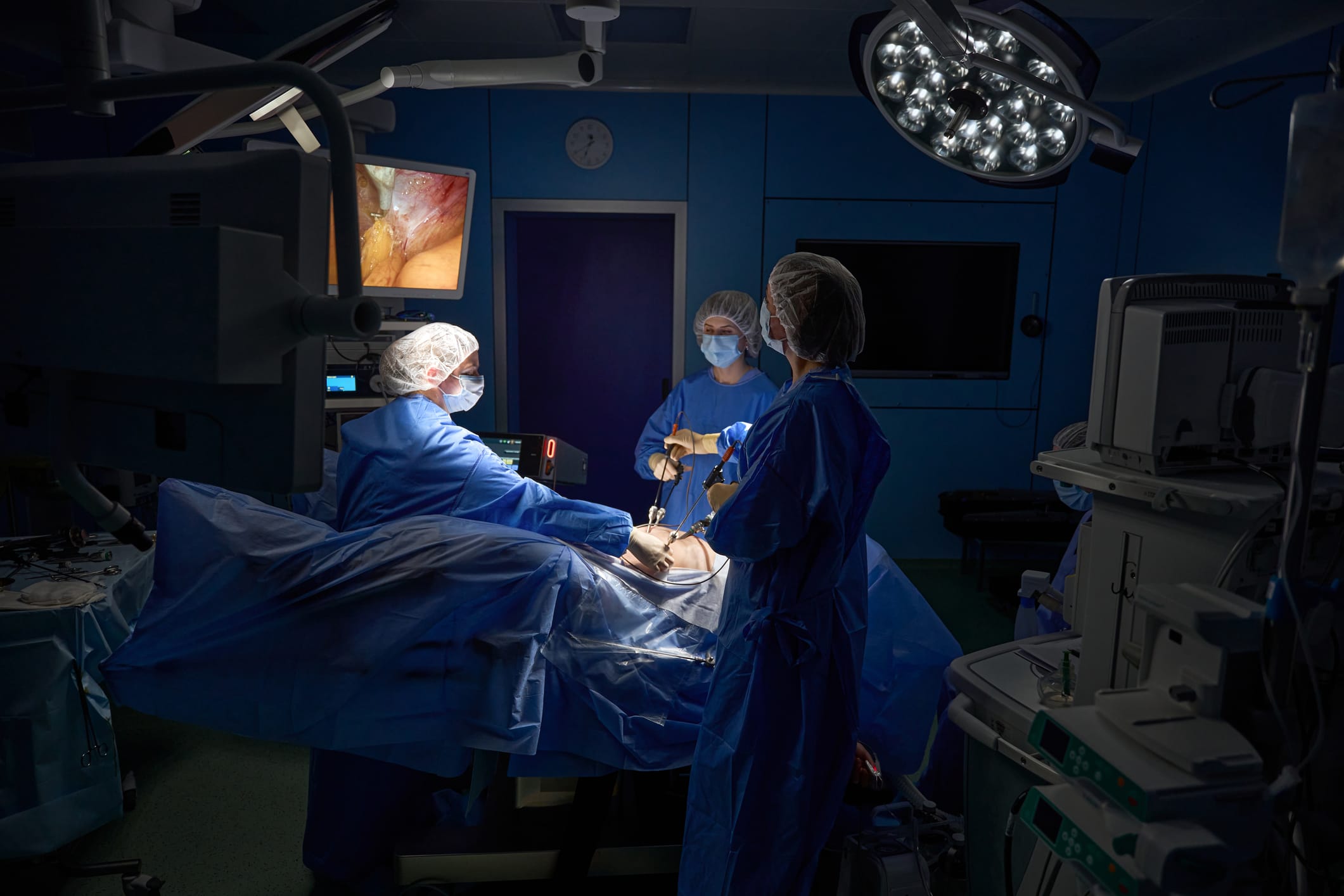
A diagnosis of endometrial cancer (EC) often means the surgical removal of the uterus and cervix (called a total hysterectomy), and potentially the ovaries, fallopian tubes and lymph nodes as well (a total hysterectomy with bilateral salpingo-oophorectomy). This removes the source of the cancer, and reduces the risk of it spreading to nearby tissue and organs. A laparoscopic hysterectomy is often recommended, as it’s minimally invasive, offers a faster recovery and can lower the risk of complications.
What is a laparoscopic hysterectomy in EC?
A laparoscopic hysterectomy is performed through small incisions made in your abdomen. Your surgeon will insert specialized tools into these incisions to perform the surgery, including a device with a camera so they can see inside your abdomen.
A laparoscopic hysterectomy is most often used in early-stage endometrial cancer or when the cancer hasn’t spread internally. The choice between a more-invasive abdominal hysterectomy (which uses a much larger incision) and a laparoscopic one will be made by your oncology team and surgeon based on your cancer grade, stage and overall health status.
A robotic-assisted laparoscopic hysterectomy is similar to a laparoscopic hysterectomy in some ways, but there are key differences. Though both procedures are performed through small incisions, in a robot-assisted hysterectomy the surgical instruments are moved by a specialized system with robotic arms; the surgeon will perform the surgery while seated at a console that controls these arms. In a laparoscopic hysterectomy, on the other hand, the surgeon stands above you and directly manipulates the surgical tools. Robot-assisted hysterectomy requires specialized surgical training and additional experience to ensure the best outcomes, and is not always an option.
Read more about EC treatment and care
What to expect during a laparoscopic hysterectomy in EC
The day of your laparoscopic hysterectomy, you’ll be admitted to hospital, prepped for surgery with an IV drip and a catheter and then given a general anesthetic. The surgeon will make several small incisions in your abdomen and insert a laparoscope — a thin plastic tube that holds a light and a camera — and other small surgical instruments. The high-definition images from the camera are shown on a video screen, guiding the surgeon as he manipulates the instruments to remove your uterus and cervix, and if necessary, your ovaries and fallopian tubes.
The surgery usually takes around an hour and a half to complete. Then the surgeon will close the incisions and transfer you to recovery. You can expect to have some minor pain around the incision sites. If your recovery is going well, you should be discharged within a day or two; some patients go home the same day as surgery.
Tips on how to help your recovery
Your recovery from a laparoscopic hysterectomy will be faster if you take the time to let your body heal. Don’t try to reduce the recovery period. This time is critical to your internal healing.
- Keep your incisions clean and dry and check daily for any signs of infection.
- Walk every day to reduce the risk of blood clots.
- Take your pain medicine when you need it.
- Sleep, rest and let your body recuperate.
- Follow your doctor’s instructions on resuming heavy lifting or sexual activity.
- Eat a healthy diet.
- Stay hydrated.
- Surround yourself with friends and family.
- Speak to a therapist if you need to explore your emotional response to your surgery.
- Stay in close contact with your healthcare team.
Sign up here to get the latest news, perspectives, and information about EC sent directly to your inbox. Registration is free and only takes a minute.